
There has been a fair amount of chatter on Twitter and in the main stream media recently about an incident in Afghanistan on 28 April 2013 which involved the Liberal candidate for Canning, former Special Air Service Regiment officer Andrew Hastie. These are the facts as we know them:
- On 8 May 2013, the Chief of Defence Force announced an inquiry into an incident of potential misconduct, stating that it had been reported through the Australian chain of command in Afghanistan.
- On 30 August 2013, the ABC’s Michael Brissenden reported that the incident involved the hands of at least one Taliban fighter being cut off by one or more SAS soldiers. The hands were supposedly brought back to base so they could be fingerprinted and the identity of the fighters confirmed. The inquiry was ongoing.
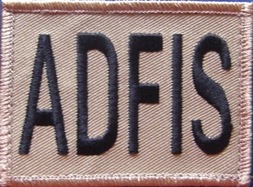
- On 29 October 2014, the ABC reported that a SAS corporal (several ranks below Hastie, a captain) could face charges for removing the hands from three Taliban insurgents during the incident, which involved a hunt for an insurgent bomb-maker. The report said that the corporal was acting on the advice of an officer from the Australian Defence Force Investigation Service (ADFIS), who had said it was acceptable to remove the hands of dead insurgents so they could be fingerprinted back at base.
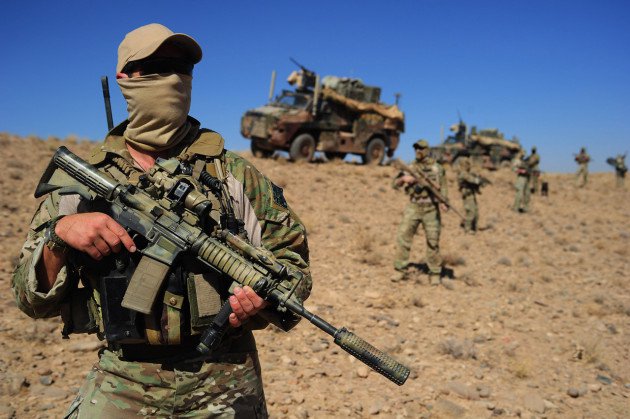
- On 8 November 2014, former Army officer and now strategic analyst James Brown penned an article for The Saturday Paper, in which he provided some more details about the incident, none of which had been officially released. They included that the operation in Zabul occurred at night, that four hands had been severed and carried back to base at Tarin Kowt in a bag, and that this had been done because the fighters were killed in a very dangerous spot and the SAS had to withdraw immediately by helicopter, so there was insufficient time or it was too dangerous to fingerprint the fighter in situ. Brown observed that all details of this incident had been prised out of the Defence Department through investigative work by journalists.
- Brown’s piece also pointed out that Senate estimates had established that the Inquiry Officer’s (IO) Report into the incident had been submitted to the ADF’s Chief of Joint Operations on 26 July 2013 (less than two months after the incident), but that the ADFIS investigation was ongoing. For the uninitiated, the IO report is an administrative investigation done under the Defence Inquiry Regulations, ADFIS investigate under the Defence Force Discipline Act. Brown also noted that the four dead insurgents possessed just one rifle and one pistol. Brown also mentioned that the Defence Department referred Brissenden to the Australian Federal Police for investigation into his sources. Of course, he points out that ADFIS is actually implicated in the matter, and is underresourced and chronically slow in completing investigations. Brown said that cutting off a combatant’s hand is not a war crime under Australian law.
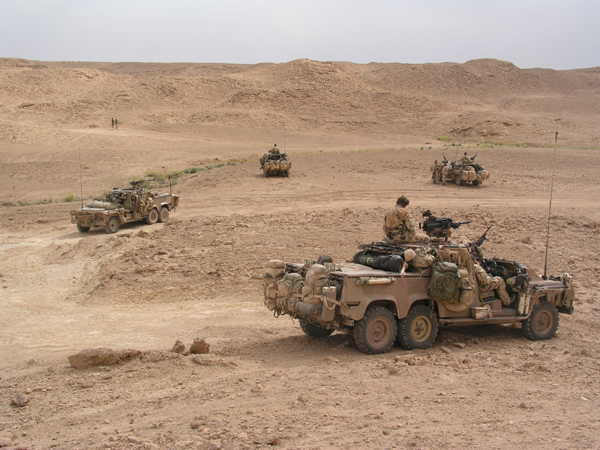 For the uninitiated, Hastie was a SAS troop commander. A SAS troop is a group of about 30 soldiers led by a captain and consisting of four or so “patrols”, each led by a sergeant or corporal. Presumably the corporal at the centre of this incident was a patrol commander with half-a-dozen troopers under his command, and part of Hastie’s troop. Of course, we really don’t know this for sure because Defence has been so opaque about the incident.
War crimes under Australian law are drawn from our international treaty law (and customary international law to some extent), mostly legislated under the Criminal Code. As the conflict in Afghanistan is not an international armed conflict, many of the war crimes provisions do not apply. However, Article 3 (common to all four Geneva Conventions) makes some provisions for war crimes outside of such a conflict, and these are codified under Chapter 8, Subdivision F of the Act. I beg to differ with Brown, in that I believe the limited facts as we know them could potentially make out a case against:
Section 268.74 War crime – outrages upon personal dignity
(2) A person (the perpetrator) commits an offence if:
(a) the perpetrator severely humiliates, degrades or otherwise violates the dignity of the body or bodies of one or more dead persons; and
(b) the dead person or dead persons were not, before his, her or their death, taking an active part in the hostilities; and
(c) the perpetrator knows of, or is reckless as to, the factual circumstances establishing that the dead person or dead persons were not, before his, her or their death, taking an active part in the hostilities; and
(d) the perpetrator’s conduct takes place in the context of, and is associated with, an armed conflict that is not an international armed conflict.
Penalty: Imprisonment for 17 years.
The key points to prove would be:
- the status of the four dead insurgents (that between them apparently possessed just two firearms). Were all four taking an active part in the hostilities before their deaths? Four men can’t all be shooting two weapons at the same time. Had the others been building bombs? What intelligence did the SAS have about the four insurgents? Did they know all their identities and their prior actions via telephone/radio interception or information from human sources?
- the knowledge or recklessness of the SAS corporal regarding whether the four were taking an active part in the hostilities before their deaths. Did he know they were each involved in hostilities, or did he not care?
Just so it is clear, there is likely no offence committed if there was sound evidence that they had all been involved in the hostilities prior to their deaths. But that is the nub of the issue here. We have a right to know what this SAS trooper did in our name. And to know what action has been taken.
There are some pretty serious questions about transparency and accountability here, some of which have been raised by Brown:
- where is the Inquiry Report and why hasn’t it been released, even in a partially redacted form if that is necessary to protect security or identify participants?
- why are ADFIS investigating this when one of their officers was allegedly involved in giving the wrong advice? How are they ensuring no “home team” bias is involved?
- why has it taken ADFIS over two years to investigate something the IO took two months to investigate?
On the facts as we know them:
- if the SAS corporal really was given that advice by ADFIS (staffed by trained investigators from the three services) then disciplinary action should be taken against those that suggested it, including anyone in the ADFIS chain of command who approved it to be tabled as an option for the SAS to consider.
- ADFIS don’t have any command or control over the SAS, and the SAS are not bound by the advice received. Everyone who received the ADFIS advice should have known that ADFIS was advocating an option that could potentially breach Australian law, and SAS commanders that received the information should not have included the option in their orders to their men. If they did, or left it open to interpretation, that is a failure of command and leadership at whatever level in happened, and disciplinary action should be taken. The question is: did Hastie attend the briefing from ADFIS? Did he include the option in his orders? I think we should know that before the Canning by-election.
- if all the SAS commanders were clear in their orders that the mutilation of corpses was not permitted unless certain circumstances existed, then it is the individual responsible for cutting off the hands that is responsible, not Hastie or any of the other SAS commanders.
We have many reasons to be proud of our Defence Force and its members, who put their lives on the line to ensure our security and safety. We may not agree with the politicians’ decisions that send them to some places, but we all have an obligation to support them when they have been deployed. On this occasion, serious questions have been asked, and successive ALP and LNP governments have failed to answer them in any substantive manner at all. We probably wouldn’t even know about them if it wasn’t for journalists like Michael Brissenden. Andrew Hastie has said that Defence has cleared him of any wrongdoing, but there is no Inquiry Report to refer to. So how about it, Kevin Andrews? We have a right to answers, the people of Canning have a right to know what the Liberal candidate for Canning knew about it and when, and Andrew Hastie has a right to be cleared of any unfair innuendo.
 thethinkingprovost.com